May 6, 2026 4 min read
What gauge means, and why we knit tight
Gauge is the number on a knit that tells you the most and gets explained the least. It decides weight, warmth, and how long the elbows last.
By The Wrenfield repair workroom
Every sweater we make has a gauge on its page: 12 for the Merino Crew, 7 for the Fisherman Rib, 5 for the beanie. We repair knitwear every week, and gauge is the thing we wish more people looked at before they bought a sweater anywhere.
What the number is
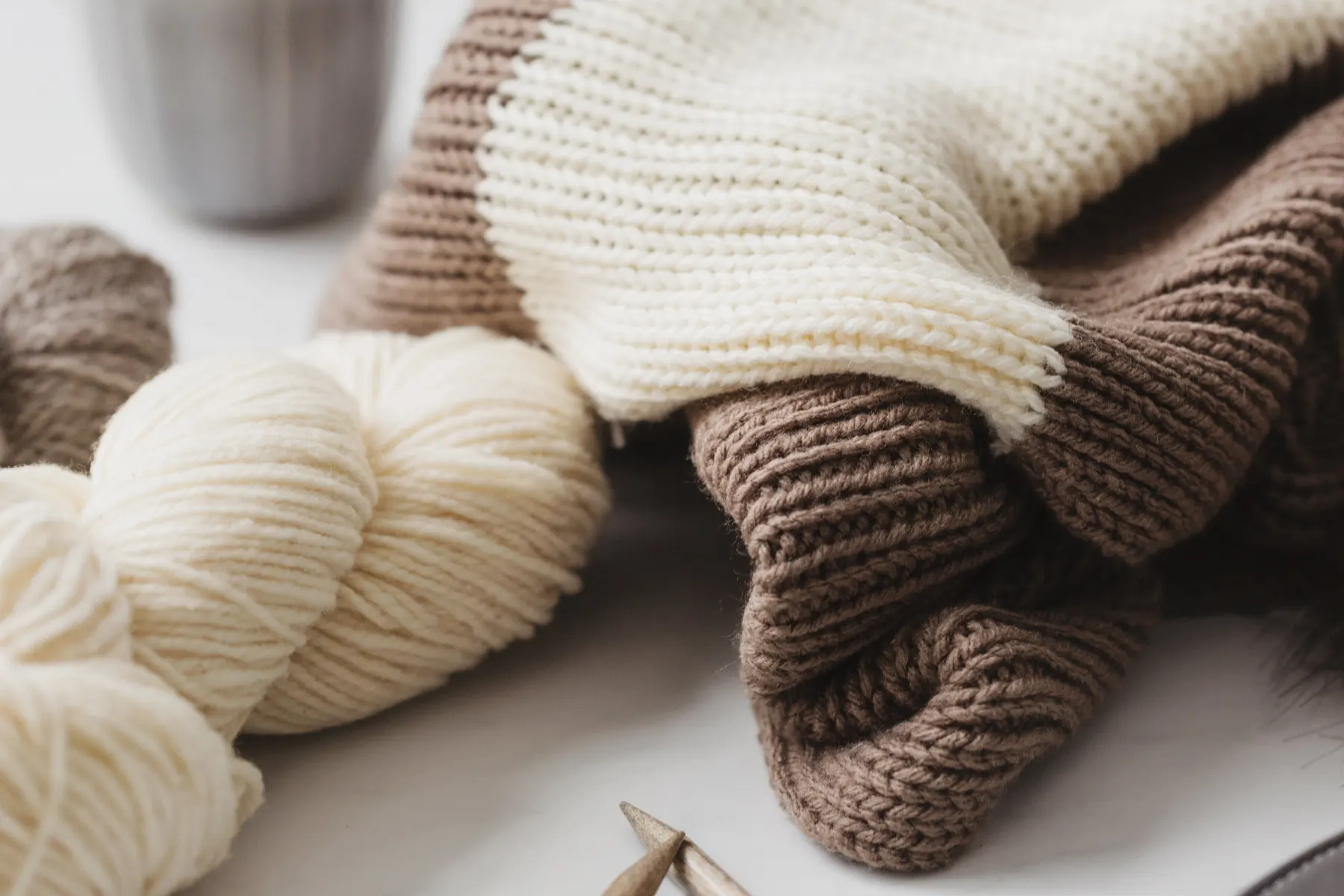
Gauge is the number of needles per inch on the knitting machine. More needles in an inch means smaller stitches, finer yarn and a tighter fabric. Fewer needles means bigger stitches and a chunkier knit.
| Gauge | What it looks like | In our range |
|---|---|---|
| 12 | Fine and smooth; you barely see the stitches | Merino Crew, Quarter-Zip, V-Neck, the cashmere blends |
| 7 | A visible, textured rib | Fisherman Rib Sweater |
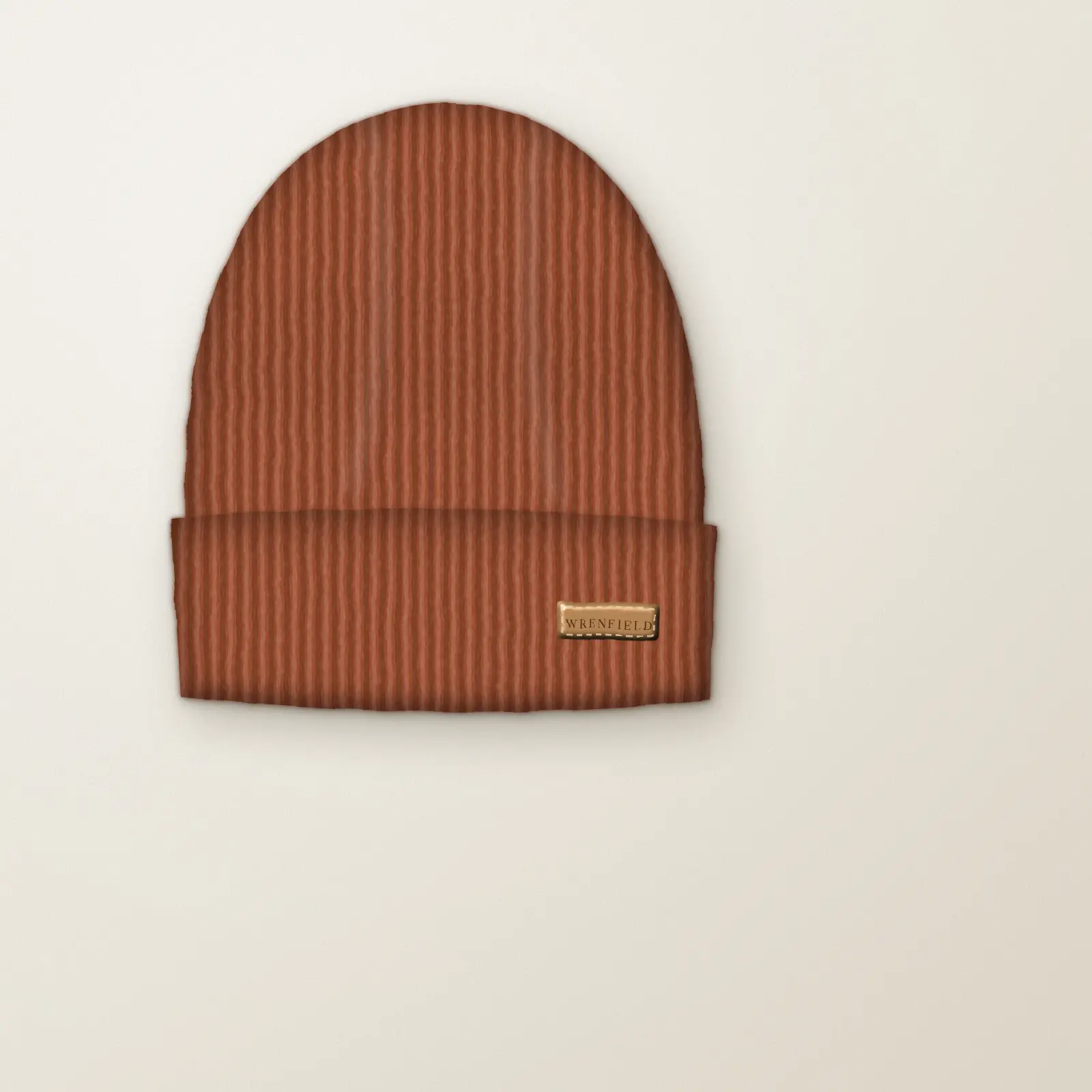
| 5 | Chunky and deep | Merino Rib Beanie |
A higher gauge is not better and a lower one is not worse. The Fisherman Rib is meant to be heavy. What matters is how tightly the fabric is knitted for its gauge.
Tight and loose at the same gauge
Two sweaters can both be 12-gauge and feel completely different. A machine can be set to knit each stitch tight, using more yarn per inch, or slack, using less. Slack knitting is faster and cheaper, and in the shop the sweater feels soft and drapes nicely. It is also the sweater that bags at the elbows by February.
This is what we see on the workroom table. A tight knit holds its stitches in place: the cuff still grips, the hem still sits flat, the elbows have not ballooned. A slack knit has grown. The yarn was fine; there simply was not enough of it in each inch to keep the shape.
How to judge it without a ruler
- Hold the sweater up to a window. A tight knit lets through little light.
- Stretch the cuff and let go. It should spring back at once.
- Feel the weight. For the same size and gauge, the heavier sweater has more yarn in it.
- Look at the rib at the hem. Tight rib lies flat; slack rib flares.
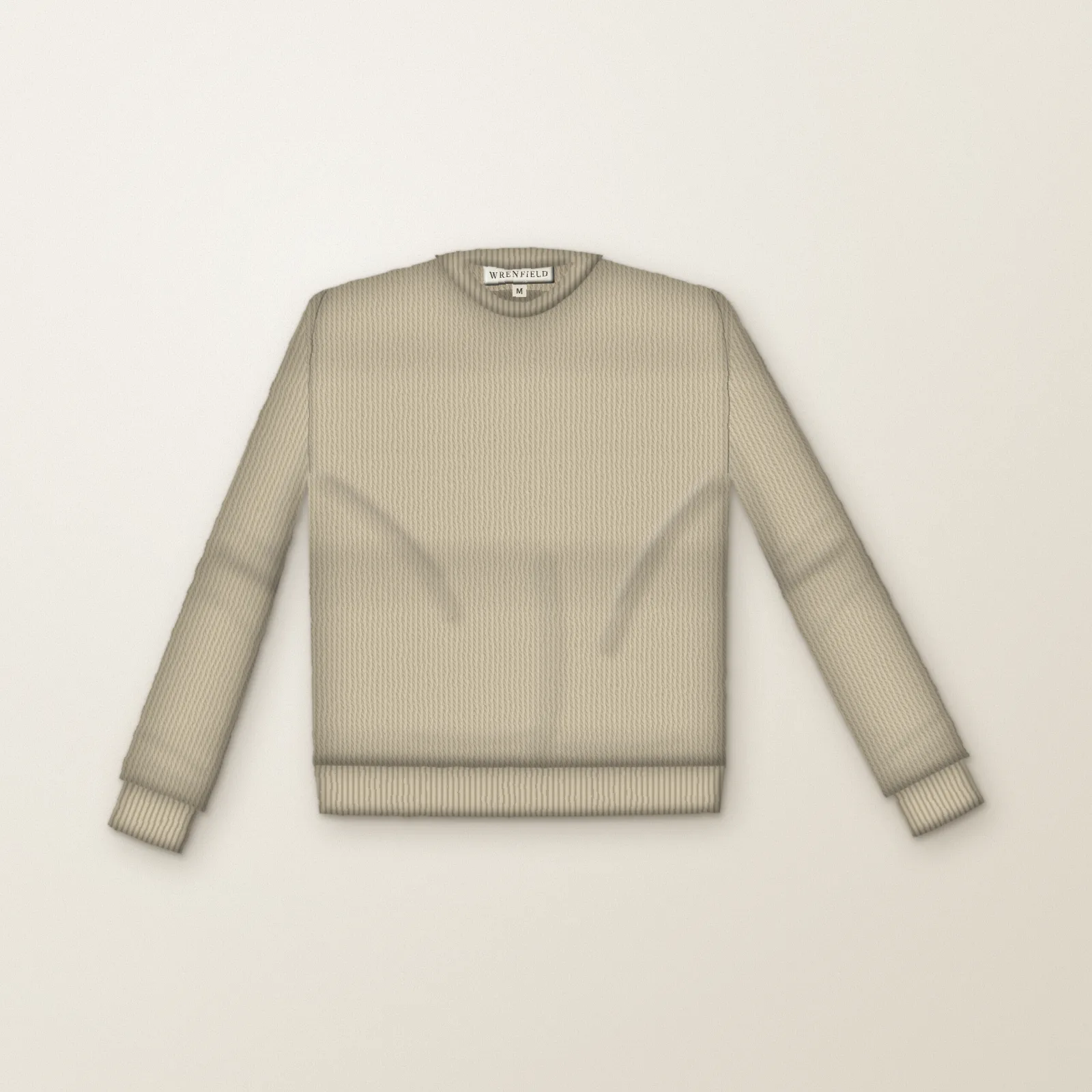
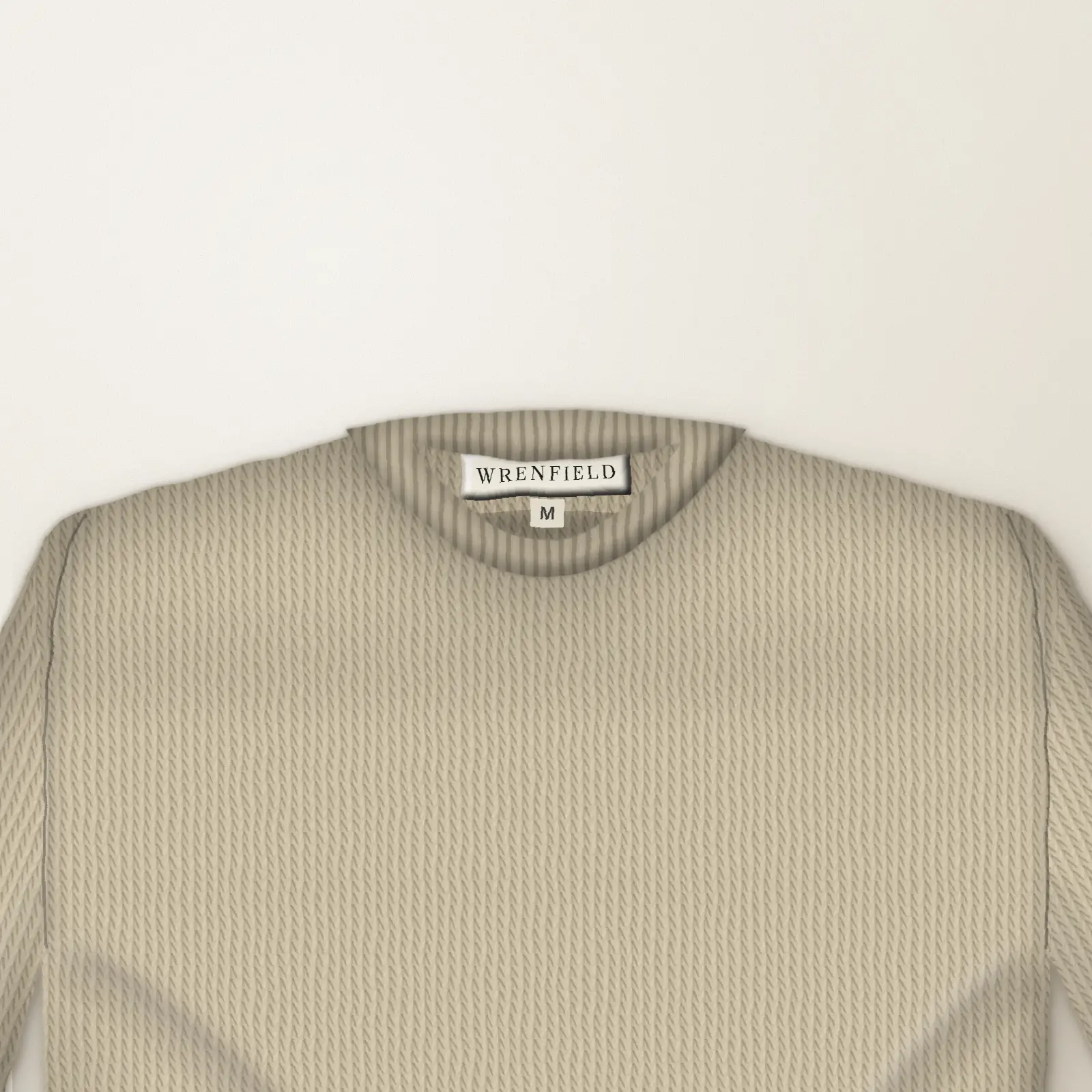
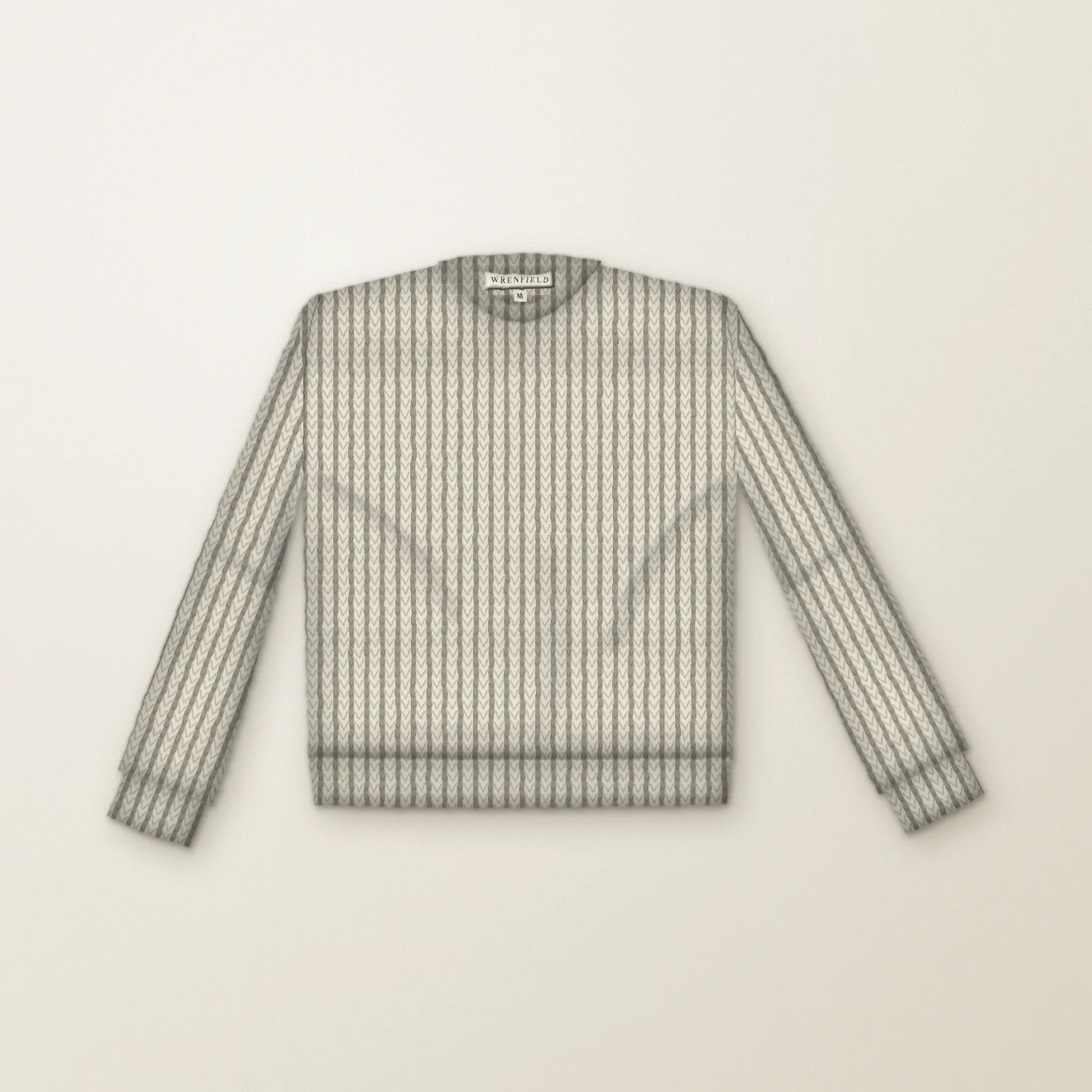
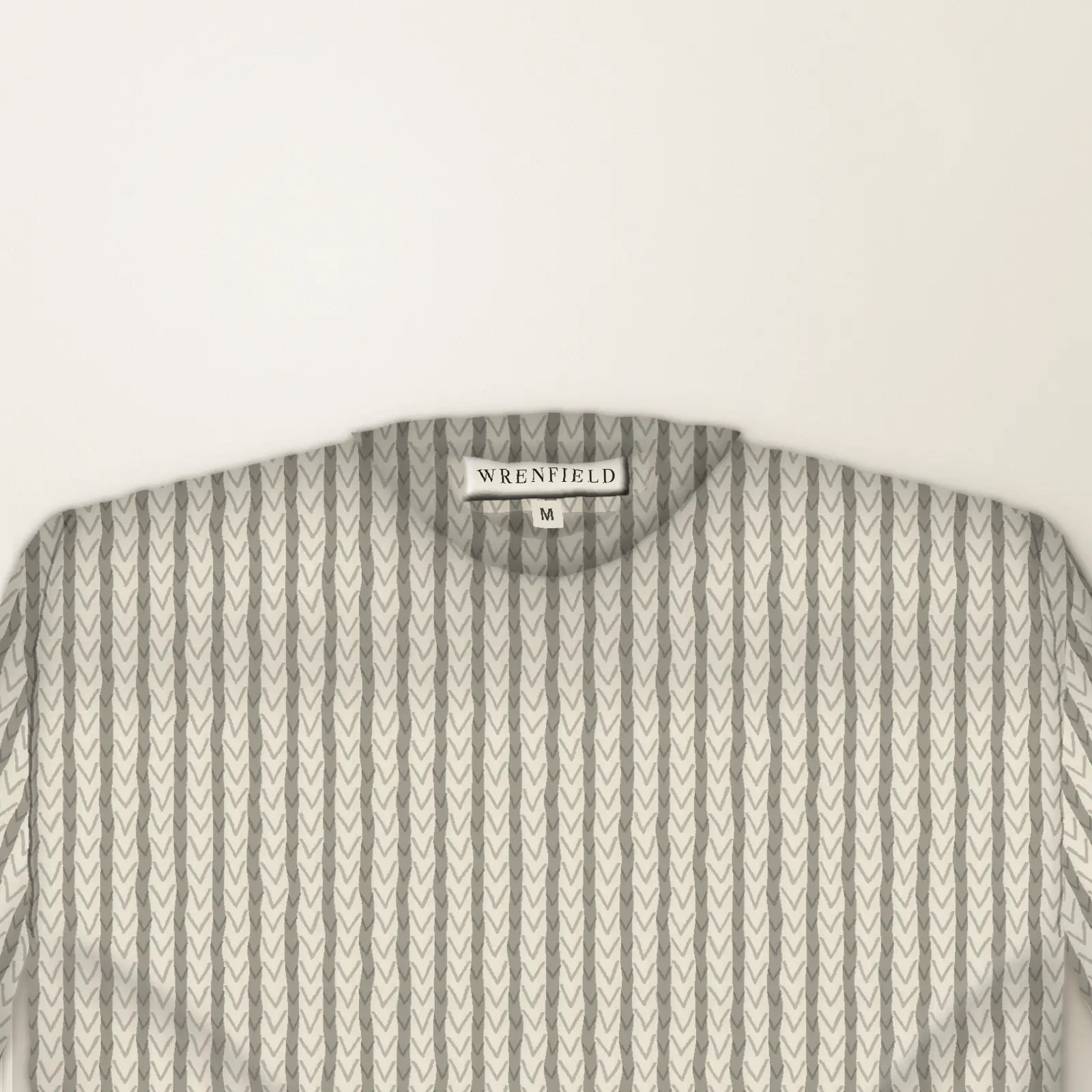
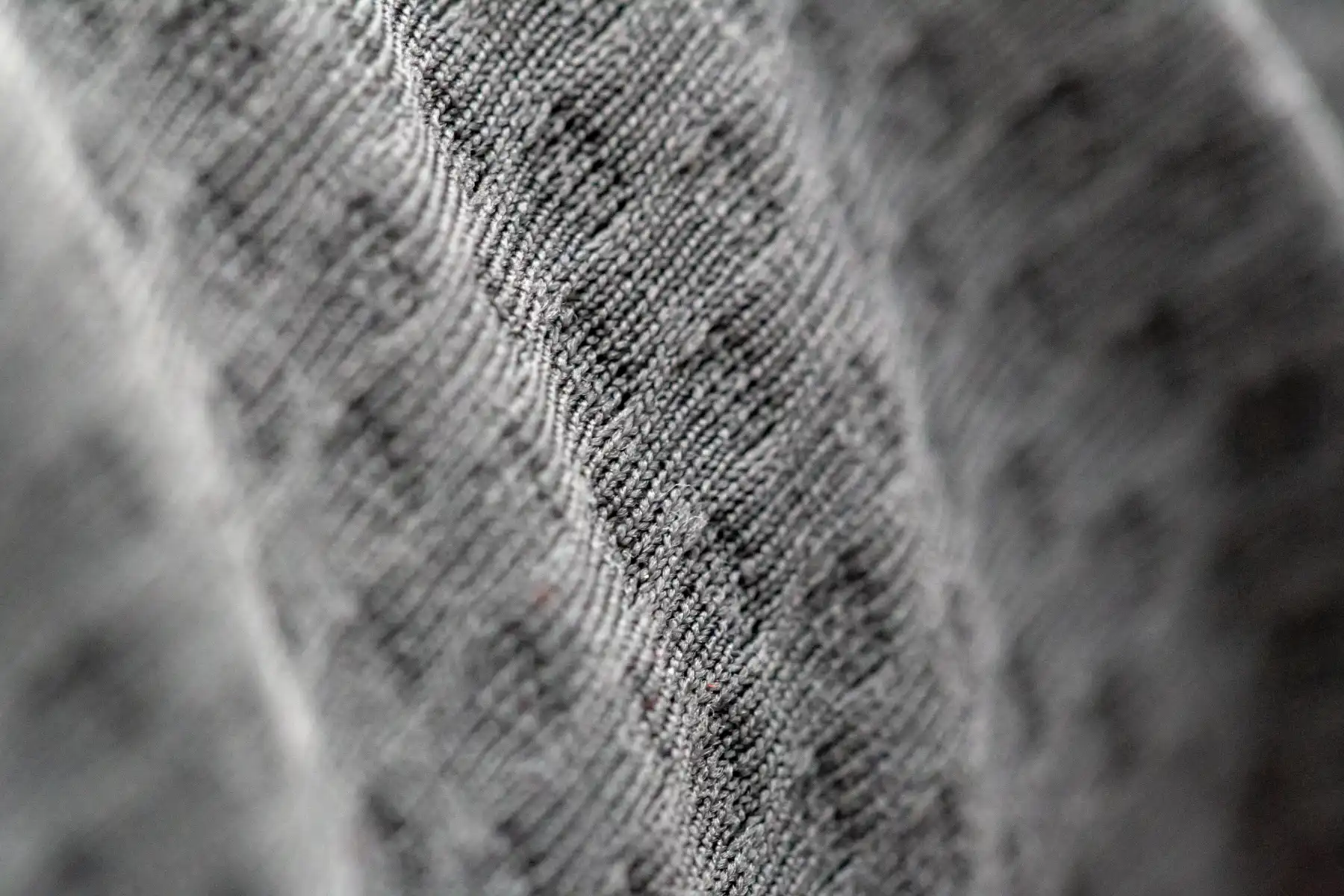
You cannot do any of that through a screen, which is why we print the gauge and the fiber on each page and describe the fabric in words. Our pictures show the knit close up, as a swatch, next to the garment.
What tight knitting costs
It is slower on the machine and uses more yarn, so the sweater costs more to make. It can also feel a little firmer when new than a loosely knitted one. It softens with washing. What it does not do is change shape.
Why the fiber still matters
Gauge and tension describe the structure, and the fiber decides the rest. Our 12-gauge sweaters are knitted in 18.5 micron merino, which is fine enough to wear on bare skin. The Fisherman Rib is British lambswool, a coarser fiber with more spring, which is why it has a little prickle at first and why it is so warm. Read the two together: a fine fiber in a tight knit is smooth and light, and a coarse one in a heavy rib is warm and textured.
What it does not fix
Tight knitting reduces pilling; it does not stop it. It does not make wool machine-proof either. A tight merino still wants cold water and a flat dry, and it still must never see a tumble dryer. And if a seam does open or a stitch drops, that is what the repair program is for.
-
- Best seller
Sweater
Merino Crew Sweater
Extra-fine merino knitted at a tight 12-gauge, in a unisex regular cut that runs true to size
5 colors
$148
-
- Low stock
Sweater
Fisherman Rib Sweater
A heavy 7-gauge lambswool rib for real cold, cut boxy with a drop shoulder
3 colors
$198
-
Beanie
Merino Rib Beanie
A double-layer merino rib beanie with a deep cuff, in one size that genuinely stretches
5 colors
$42